
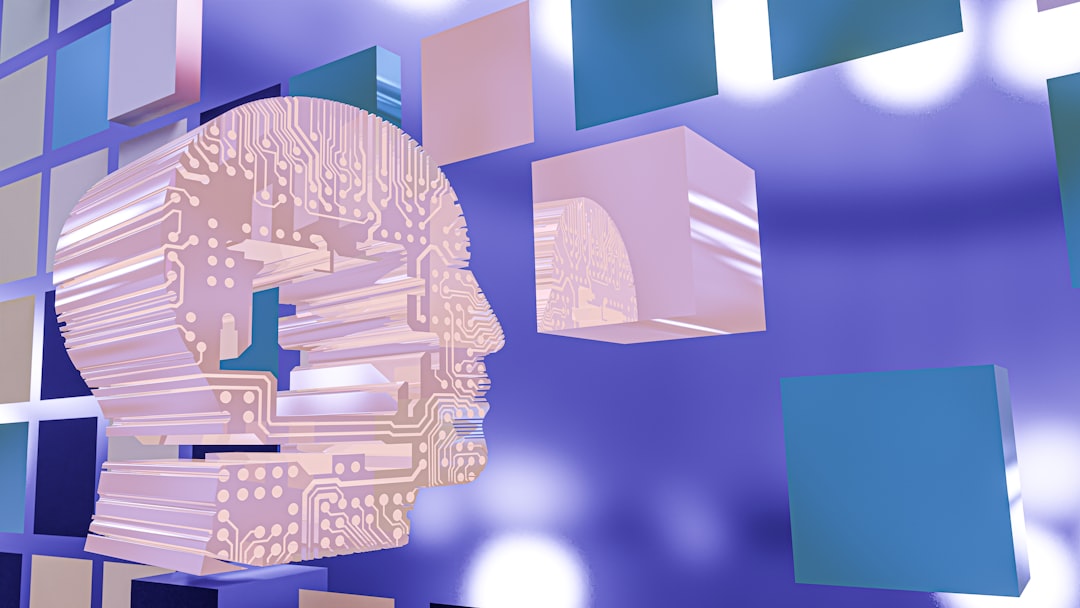
Artificial intelligence, machine learning, and deep learning are often discussed as if they mean the same thing. They are closely related, but they are not interchangeable. Understanding the difference matters because these technologies shape search engines, medical tools, fraud detection systems, recommendation platforms, voice assistants, and many other parts of modern life. A clear explanation helps business leaders, students, and everyday users make better decisions about how these systems work and what they can realistically do.
TLDR: Artificial intelligence is the broad idea of making machines perform tasks that normally require human intelligence. Machine learning is a major branch of AI that allows computers to learn patterns from data instead of being manually programmed for every rule. Deep learning is a more advanced type of machine learning that uses layered neural networks to process very large and complex data sets. In simple terms: deep learning is part of machine learning, and machine learning is part of AI.
Understanding the Big Picture
The easiest way to understand the relationship is to imagine three circles inside one another. The largest circle is artificial intelligence. Inside it sits machine learning. Inside machine learning sits deep learning. Each term describes a different level of technology and complexity.
AI is the overall field. It includes any method that helps machines imitate or support intelligent behavior. Machine learning is one way to achieve AI by using data and statistical methods. Deep learning is a specialized form of machine learning that uses neural networks with many layers to recognize highly complex patterns.

What Is Artificial Intelligence?
Artificial intelligence, often shortened to AI, refers to computer systems designed to perform tasks that usually require human intelligence. These tasks may include reasoning, planning, understanding language, recognizing images, making decisions, or solving problems.
AI does not always need to “learn” from data. Some AI systems follow rules created by human experts. For example, an early medical diagnosis system might use a set of programmed rules such as: if a patient has certain symptoms and test results, suggest a possible condition. This is still AI because the machine is performing a task associated with human reasoning.
Common examples of AI include:
- Virtual assistants that respond to spoken or typed questions.
- Navigation systems that calculate routes and adapt to traffic.
- Game playing systems that make strategic decisions.
- Automated customer support that answers common questions.
- Robotics used in factories, warehouses, healthcare, and exploration.
The goal of AI is not always to copy human thinking exactly. In many cases, the goal is simply to produce useful intelligent behavior. A calculator does not think like a person, but it performs arithmetic better and faster than most humans. Similarly, many AI systems are built to complete specific tasks efficiently, not to become human-like.
What Is Machine Learning?
Machine learning, or ML, is a subset of AI that enables computers to learn from data. Instead of giving the computer every instruction manually, developers provide examples, and the system identifies patterns that help it make predictions or decisions.
For example, suppose a bank wants to detect fraudulent credit card transactions. A traditional rule-based system might flag purchases over a certain amount or transactions from unusual locations. A machine learning system can go further. It can study millions of previous transactions and learn patterns associated with fraud, including combinations of factors that would be difficult for humans to define manually.
Machine learning is especially useful when:
- The problem involves large amounts of data.
- The patterns are too complex for simple rules.
- The system needs to improve as new data becomes available.
- Predictions are more useful than fixed instructions.
There are several major types of machine learning:
- Supervised learning: The system learns from labeled examples. For instance, images may be labeled as “cat” or “dog,” and the model learns to classify new images.
- Unsupervised learning: The system looks for patterns in data without pre-existing labels. This is common in customer segmentation and anomaly detection.
- Reinforcement learning: The system learns by taking actions and receiving rewards or penalties. This is used in robotics, games, and some optimization problems.
Machine learning does not produce perfect answers. It produces predictions based on patterns in data. The quality of those predictions depends on the quality, quantity, and relevance of the data used for training.
What Is Deep Learning?
Deep learning is a specialized branch of machine learning based on artificial neural networks. These networks are inspired loosely by the structure of the human brain, although they are not true copies of biological brains. A neural network is made of connected layers that process information step by step.
The word deep refers to the use of many layers. A simple neural network may have only a few layers, while a deep learning model may have dozens, hundreds, or even more. Each layer transforms the data in some way, allowing the system to learn increasingly complex features.
For example, in image recognition, early layers may detect basic edges and colors. Middle layers may identify shapes or textures. Later layers may recognize objects such as faces, cars, or animals. This layered learning is one reason deep learning has become powerful in fields such as computer vision, speech recognition, language translation, and generative AI.
Deep learning often requires:
- Large data sets to train effectively.
- High computing power, often using GPUs or specialized hardware.
- Careful model design to avoid poor performance or bias.
- Longer training times than many traditional machine learning methods.
Deep learning is behind many modern AI breakthroughs. It powers image generation, advanced chatbots, automatic speech transcription, real-time translation, facial recognition, and complex recommendation systems. However, it is not always the best choice. For smaller problems with limited data, traditional machine learning may be faster, cheaper, and easier to explain.
Key Differences Explained Simply
The main differences between AI, machine learning, and deep learning can be understood by comparing their scope, method, data needs, and typical use cases.
- Scope: AI is the broadest field. Machine learning is a subset of AI. Deep learning is a subset of machine learning.
- Method: AI may use rules, logic, search algorithms, or learning methods. Machine learning uses data to learn patterns. Deep learning uses multi-layer neural networks.
- Data needs: Some AI systems need little data if they are rule-based. Machine learning usually needs structured training data. Deep learning typically needs very large data sets.
- Computing power: Traditional AI and simpler machine learning models may run on modest hardware. Deep learning often requires significant computing resources.
- Explainability: Rule-based AI and some machine learning models are easier to interpret. Deep learning models can be harder to explain because their decisions pass through many layers of calculation.
- Best use: AI is useful for broad intelligent automation. Machine learning is useful for prediction and pattern recognition. Deep learning is especially useful for complex data such as images, audio, video, and natural language.
A Practical Example: Email Filtering
Consider the problem of identifying spam emails. A simple AI system might use human-written rules. For example, if an email contains certain suspicious phrases, unusual links, or too many capital letters, it may be marked as spam.
A machine learning system would analyze many examples of spam and non-spam emails. It would learn which words, sender patterns, formatting styles, and behaviors are associated with unwanted messages. Over time, it could adapt to new types of spam more effectively than a fixed rule system.
A deep learning system could go even further by analyzing the meaning and structure of the email text. It might understand context, detect subtle phishing attempts, and recognize patterns that are not obvious from individual keywords. This can improve accuracy, especially when attackers try to avoid simple spam rules.
This example shows the progression clearly: AI can follow rules, machine learning can learn from examples, and deep learning can learn complex representations from large amounts of data.
Why People Confuse These Terms
People often confuse AI, machine learning, and deep learning because the terms are used loosely in marketing, media, and everyday conversation. A company may advertise an “AI-powered” product even if it uses a basic machine learning model. Another company may describe a deep learning system simply as AI because that term is more familiar to the public.
The confusion is understandable. These technologies overlap, and their boundaries are not always visible to users. When a phone recognizes your voice, when a streaming service recommends a film, or when a camera app improves an image, you may only see the result. You do not necessarily know whether the system uses rules, machine learning, deep learning, or a combination of methods.
Still, using the terms accurately is important. It helps set realistic expectations. Not every AI system can learn. Not every machine learning model is deep learning. Not every deep learning system understands the world in the way a human does.
Strengths and Limitations
Each approach has strengths and weaknesses. Traditional AI can be reliable and transparent when the rules are clear. It works well in controlled environments, but it may struggle with messy real-world data. Machine learning is flexible and powerful for prediction, but it depends heavily on training data. If the data is biased or incomplete, the model’s results may also be biased or unreliable.
Deep learning can achieve impressive results with complex data, but it is often expensive to train and difficult to interpret. It may also make confident mistakes. For serious applications such as healthcare, finance, transportation, or law, human oversight, testing, and accountability are essential.
Which One Matters Most?
It depends on the problem. If a task can be solved with clear rules, a traditional AI approach may be enough. If the task requires predictions from historical data, machine learning may be the best choice. If the task involves highly complex patterns in images, speech, or language, deep learning may provide the strongest results.
In real-world systems, these approaches are often combined. A self-driving car, for example, may use deep learning to recognize objects, machine learning to predict movement, and rule-based AI to follow traffic laws or safety constraints. A medical software platform may use machine learning to identify risk patterns while relying on expert rules for compliance and clinical guidelines.
Final Thoughts
Artificial intelligence is the broad field of building machines that perform intelligent tasks. Machine learning is a major way to build AI by allowing systems to learn from data. Deep learning is a powerful form of machine learning that uses layered neural networks to handle complex information.
The simplest way to remember the difference is this: AI is the goal, machine learning is one method, and deep learning is a more advanced technique within that method. These technologies are not magic, and they are not all the same. They are practical tools with different strengths, costs, and risks. Understanding those differences is the first step toward using them wisely and evaluating them responsibly.