Golf is having a very nerdy glow up. Clubs are smarter. Balls are faster. Watches know more than your caddie. Even golf carts are starting to feel like mini spaceships. The best part? You do not need to be a tech genius to enjoy it.
TLDR: Golf technology is making the game easier, faster, and more fun. New clubs, balls, launch monitors, apps, and wearables help players understand their swing and make better choices. Equipment is also becoming more custom, more forgiving, and more eco friendly. In short, golf gear is getting smarter, but the goal is still simple: hit the ball, find it, and smile.
The Big Picture: Golf Has Gone Digital
For years, golf equipment changed slowly. A driver got a little bigger. A putter got a new shape. A ball promised five extra yards. Then technology ran onto the fairway wearing shiny shoes.
Now golfers can track almost everything. Swing speed. Ball speed. Launch angle. Spin rate. Carry distance. Club path. Face angle. Even heart rate. That is a lot of numbers for a game that still begins with a tiny ball sitting still on grass.
But this is good news. The new tools are not just for tour pros. They are for weekend players too. They help answer simple questions, such as:
- Why does my drive slice into the trees?
- Which club should I hit from 145 yards?
- Do I really need a new driver?
- Why does my putter feel like a mystery wand?
Golf tech is not here to make the game cold and robotic. It is here to make learning easier. It is here to make practice less boring. It is here to help you stop blaming the wind when the wind did nothing wrong.
Smart Drivers Are Built for Forgiveness
The driver is still the rock star of the golf bag. It gets the biggest cheers. It also causes the biggest groans. Modern driver technology is focused on one main thing: forgiveness.
That means the club helps you when you miss the center of the face. And let us be honest. Most golfers miss the center more often than they admit.
New drivers use lighter materials, adjustable weights, and clever face designs. Many brands use carbon fiber to save weight. That saved weight can be moved around the clubhead. This helps add stability. It can also help launch the ball higher with less spin.
Some drivers now have faces designed by computer testing. Engineers try thousands of face shapes. They look for more ball speed across a larger area. So even if you hit it a little toward the toe or heel, the ball still goes a decent distance.
Is it magic? No. But it can feel close when your bad shot still ends up in the fairway.

Irons Are Getting Friendlier
Old school irons looked sharp and serious. They were beautiful. They were also not very kind. If you missed the middle, your hands knew it. Your scorecard knew it too.
Today, many irons are built to be easier to hit. They have hollow bodies, stronger faces, and lower centers of gravity. That sounds fancy. It really means one thing: the ball can launch higher and fly farther.
Game improvement irons are especially popular. These clubs are made for regular golfers. They help with distance, height, and direction. They also give you a little more confidence when you stand over the ball.
There is also a trend toward combo sets. That means a golfer may use forgiving long irons and more precise short irons. It is like having a sensible breakfast and then ordering dessert. You get the best of both worlds.
Wedges Are All About Spin and Control
Wedges may not look as exciting as drivers. But they save scores. A good wedge shot can turn a disaster hole into a polite bogey. Sometimes even a shocking par.
New wedge designs focus on grooves, grinds, and finishes. Grooves help create spin. Grinds change how the bottom of the club moves through grass or sand. Finishes can affect feel and glare.
Many golfers are now paying more attention to wedge fitting. This is smart. A player with a steep swing may need a different wedge than a player who sweeps the ball. A golfer in soft conditions may need more bounce. A golfer on firm turf may need less.
Simple version: the right wedge helps the club slide, not dig like a shovel.
Putters Are Becoming Tiny Science Projects
Putting is simple. Just roll the ball into the hole. Easy, right? Of course not. Putting is where calm people become philosophers.
Modern putters use alignment lines, special face inserts, high stability shapes, and adjustable weights. Mallet putters are very popular because they resist twisting. That helps the ball start on line more often.
Some putters also use technology to improve feel. Soft inserts can make the ball feel gentle off the face. Milled metal faces can feel firmer and more exact. Neither is automatically better. It depends on what makes you feel confident.
And confidence matters. A putter could be shaped like a kitchen appliance, but if you make putts with it, no one gets to laugh.
Golf Balls Are Built for Different Players
The golf ball is small, but it is packed with tech. Layers, covers, dimples, cores, and compression all matter. That sounds like a snack cake recipe. It is not. It is ball design.
Tour level balls usually offer more spin around the greens. They also feel softer and give better control. Distance balls are often firmer and designed to reduce spin off the driver. That can help players who slice or hook too much.
The biggest trend is choice. There is a ball for almost every swing speed and budget. Some balls help slower swingers get more distance. Others help fast swingers control launch and spin.
Here is a simple guide:
- Want more short game spin? Try a premium urethane ball.
- Want more distance? Try a lower spin distance ball.
- Want softer feel? Look for low compression.
- Lose many balls? Do not buy the most expensive box yet.
Launch Monitors Are Getting Smaller and Cheaper
Launch monitors used to be giant, expensive machines. You saw them in tour vans, fitting studios, and fancy indoor golf centers. Now, smaller models are showing up in garages, backyards, and practice bays.
These devices track your shots. They can show carry distance, ball speed, launch angle, spin, and more. Some connect to apps. Some work with simulator software. Some let you play famous courses without leaving home.
This is one of the biggest golf technology trends. It helps players practice with purpose. Instead of guessing, you can see what happened.
For example, you may think your 7 iron goes 160 yards. The monitor may gently say, “Friend, it goes 143.” This truth may sting. But it helps you choose the right club on the course.
Golf Simulators Are Booming
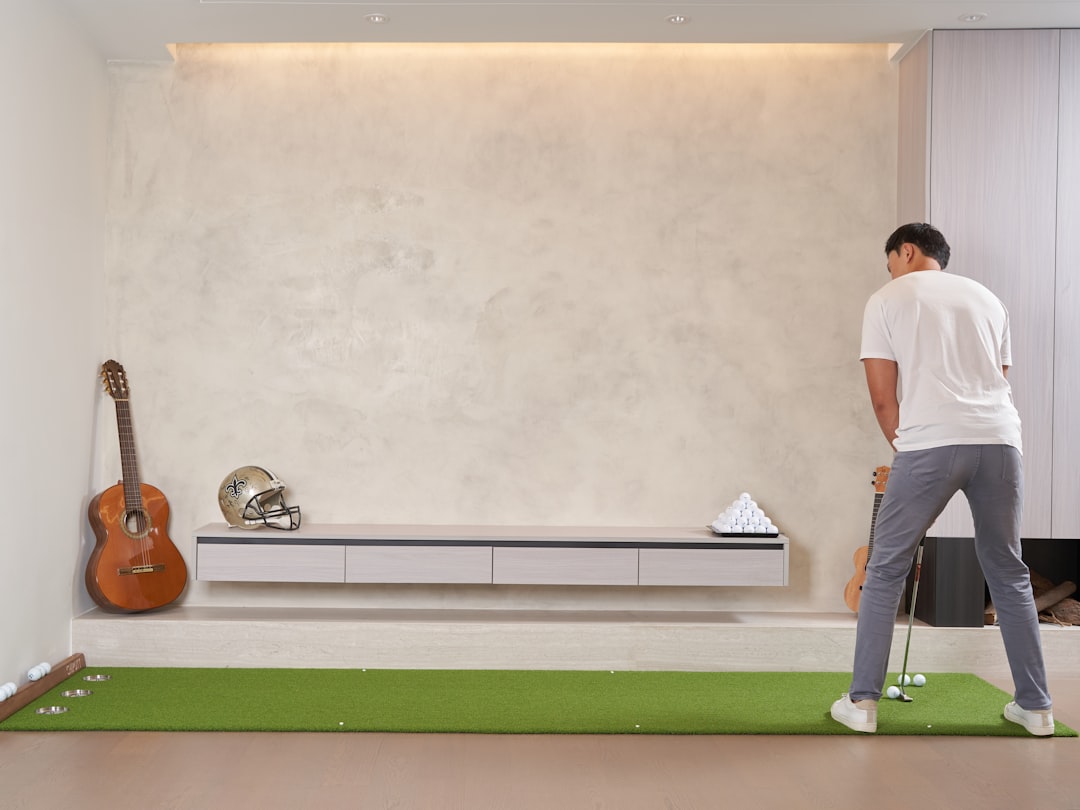
Indoor golf keeps growing. Bad weather? No problem. Busy schedule? Hit balls at night. Live in a cold place? Your swing does not need to hibernate.
Simulators are now more realistic than ever. Screens are better. Software is smoother. Course graphics look amazing. Some systems even show rough, wind, slopes, and putting breaks.
Home setups can be simple or very fancy. A basic setup may include a hitting mat, net, launch monitor, and tablet. A deluxe setup may include a projector, impact screen, turf, enclosure, and a room your friends suddenly want to visit.
Sim golf also makes practice more fun. You can play games. You can compete online. You can work on distance control. You can also hit 40 drives without walking after them. That is both useful and deeply satisfying.
Wearables Are the New Caddie
Golf watches and smart bands are everywhere. They give yardages, track shots, measure steps, and show hazards. Some even suggest clubs based on past performance.
Rangefinders are popular too. Laser rangefinders give exact yardage to the flag. GPS devices show distances to the front, middle, and back of the green. Many players use both.
Wearables are helpful because golf is full of decisions. How far is the bunker? Is the pin in the back? Can I carry the water? Should I go for it? Should I make a smarter choice for once?
The watch cannot swing for you. But it can help you avoid a silly mistake. That alone may save strokes.
Artificial Intelligence Is Joining the Lesson Tee
AI is starting to appear in golf apps, club fitting, and swing analysis. A phone camera can record your swing. An app can compare positions, highlight movements, and give feedback. Some systems can spot patterns over time.
This does not replace a great coach. A good teacher sees tension, balance, rhythm, and habits. But AI can be a helpful practice buddy. It can show you what your swing is doing when no coach is there.
AI is also helping with equipment design. Computers can test shapes, weights, and materials faster than humans alone. This helps brands create clubs that perform better for more players.
In simple terms, the robots are not taking over golf. They are just helping your 6 iron stop going right.
Custom Fitting Is No Longer Just for Pros
One of the best trends in golf equipment is custom fitting. More golfers now understand that clubs should match the player. Not the other way around.
A fitting can look at shaft flex, shaft weight, club length, lie angle, grip size, loft, and head design. That sounds like a lot. But a good fitter makes it simple.
Custom fitting can help with:
- Better contact with the center of the face.
- More consistent distance from club to club.
- Improved direction and ball flight.
- More comfort at address and during the swing.
You do not need to be a low handicap player to get fit. In fact, higher handicap players may benefit a lot. The wrong clubs can make the game harder. Golf is already hard enough. No need to bring a spoon to a sword fight.
Eco Friendly Gear Is Getting Attention
Golf is also thinking more about sustainability. Some brands are using recycled materials in bags, shoes, and apparel. Others are reducing packaging. Golf ball companies are exploring better production methods.
Courses are getting smarter too. Many use advanced irrigation systems. These systems save water by measuring soil moisture and weather patterns. Electric carts and maintenance tools are also becoming more common.
This matters because golf depends on nature. Grass, trees, sand, water, fresh air, and sunshine are part of the game. Better technology can help protect those things.

What Equipment Trends Should You Watch?
The next few years should be exciting. Golf gear will keep getting smarter. But the best trends will stay focused on simple player needs.
Watch for these changes:
- More forgiving clubs that help off center hits.
- Better fitting tools using data and AI.
- Smaller launch monitors at lower prices.
- Improved golf apps for practice and course strategy.
- More comfortable shoes with athletic designs.
- Lighter bags with smarter storage.
- Greener products made with better materials.
Should You Buy the Newest Gear?
New equipment is fun. Very fun. A shiny driver can make any golfer feel brave. But you do not always need the newest thing.
Before buying, ask yourself a few questions:
- Does this solve a real problem in my game?
- Have I tested it against my current gear?
- Does it fit my swing?
- Will I use the technology often?
- Can a lesson help more than a new club?
Sometimes the answer is yes. A new club, ball, or device can truly help. Other times, the best upgrade is practice. Annoying, but true.
The smartest move is to test before you buy. Get fit if possible. Compare numbers. Pay attention to feel. And remember that confidence counts. If a club makes you feel good, that matters.
The Fun Future of Golf
Golf technology is moving fast. But the heart of the game has not changed. You still stand over the ball. You still take a swing. You still hope it goes where you planned. Sometimes it does. Sometimes it visits another postcode.
The best equipment trends are not about showing off. They are about making golf more enjoyable. More players can learn faster. More players can practice at home. More players can find clubs that actually fit. More players can understand their game without needing a science degree.
So embrace the gadgets if they help. Try the new clubs if they feel right. Use the watch, the rangefinder, the app, or the launch monitor. But do not forget to laugh. Golf is still golf. It is a game of tiny wins, weird bounces, and stories that get better every time you tell them.
Final thought: Technology can help you play better. It can make practice smarter. It can even make bad shots less bad. But the best golf upgrade is still simple: enjoy the walk, enjoy the swing, and enjoy the next shot.