
Predictive analytics has moved from a specialist discipline into the everyday toolkit of data teams, business analysts, and machine learning practitioners. Platforms like RapidMiner became popular because they made model building more visual, repeatable, and accessible without removing the power needed for serious experimentation. If you are looking for alternatives that support machine learning workflows, automation, data preparation, model evaluation, and deployment, there are several strong options worth considering.
TLDR: If you like RapidMiner’s visual workflow approach, tools such as KNIME, Dataiku, Alteryx, H2O.ai, and SAS Viya offer similar predictive analytics capabilities with different strengths. KNIME is excellent for open, modular workflows; Dataiku is strong for collaboration; Alteryx is business analyst friendly; H2O.ai focuses heavily on automated machine learning; and SAS Viya is ideal for enterprise analytics. The best choice depends on your team’s technical skill level, governance needs, deployment goals, and budget.
Why Look Beyond RapidMiner?
RapidMiner is widely respected for its drag and drop interface, process design, and machine learning support. However, organizations often compare alternatives when their needs evolve. A startup may want a more open source friendly platform. A large enterprise may need stronger governance and model monitoring. A business intelligence team may prefer a tool that connects naturally to spreadsheets, databases, and dashboards.
The ideal predictive analytics platform should help users move from raw data to useful predictions with minimal friction. That usually means supporting data ingestion, data cleansing, feature engineering, model training, validation, and deployment. Some platforms emphasize no code workflows, while others give data scientists full access to Python, R, SQL, and advanced model customization.
1. KNIME: A Flexible Open Analytics Platform
KNIME is one of the closest alternatives to RapidMiner in terms of visual workflow design. It uses a node based interface where users connect data sources, transformation steps, machine learning algorithms, and output components into a complete analytics pipeline. This makes it especially appealing to teams that want transparency in how data moves through a process.
One of KNIME’s biggest advantages is its open and extensible ecosystem. It integrates with Python, R, Java, Spark, SQL databases, cloud platforms, and many machine learning libraries. Users can start with no code nodes and gradually add scripted components when needed. That flexibility makes it useful for both analysts and experienced data scientists.
KNIME is also popular in industries such as pharmaceuticals, finance, manufacturing, and retail because it supports reproducible workflows. Instead of leaving important logic hidden inside scattered scripts or spreadsheets, teams can visually document each step. This makes collaboration and auditing easier.
- Best for: Teams that want a visual, modular, and highly extensible analytics environment.
- Key strengths: Open architecture, strong community, many integrations, reproducible workflows.
- Potential limitation: Complex workflows can become visually crowded without good organization.
2. Dataiku: Collaboration Across the Entire AI Lifecycle
Dataiku is a powerful platform for organizations that want predictive analytics to be collaborative rather than isolated inside a data science team. It is designed for multiple user types: data analysts, engineers, data scientists, machine learning engineers, and business stakeholders. This cross functional approach makes it especially valuable for companies scaling AI across departments.
Like RapidMiner, Dataiku supports visual workflows, but it also provides deep coding options. Users can prepare datasets visually, create machine learning models through guided interfaces, or write custom code in Python, R, SQL, and Scala. This makes it easier for teams with mixed skill levels to work in the same environment.
Dataiku also shines in governance and operationalization. It includes features for model documentation, versioning, approval workflows, scenario automation, and monitoring. For organizations that need to put predictive models into production responsibly, these capabilities are often just as important as algorithm selection.
Another standout feature is Dataiku’s focus on making AI projects reusable. Teams can create templates, share datasets, package workflows, and build internal best practices. This helps prevent duplicate work and encourages consistency across projects.
- Best for: Enterprises and growing teams that need collaboration, governance, and scalable AI workflows.
- Key strengths: Collaborative interface, strong governance, code and no code support, production readiness.
- Potential limitation: It may feel too extensive for small teams that only need lightweight modeling.
3. Alteryx: Predictive Analytics for Business Users
Alteryx is a favorite among business analysts because it makes data preparation and analytics approachable. While it is often known for data blending and automation, it also includes predictive analytics and machine learning capabilities. For teams that live close to business reporting, customer segmentation, sales forecasting, or operational analytics, Alteryx can be a practical alternative to RapidMiner.
The platform uses a visual workflow canvas where users drag tools into a sequence: input data, clean fields, join tables, create formulas, train models, and export results. It is particularly strong at connecting to many data sources, including spreadsheets, databases, cloud storage, and business applications.
Alteryx’s predictive tools can support regression, classification, clustering, time series forecasting, and prescriptive analytics. It also integrates with R and Python, allowing more advanced users to extend workflows beyond the built in components. The result is a platform that can serve both everyday analytics tasks and more advanced modeling projects.
Where Alteryx stands out is speed. Business teams can automate repetitive data tasks without waiting for engineering resources. For example, a marketing analyst can build a workflow that combines campaign data, customer profiles, and purchase history, then predicts which customers are likely to respond to a promotion.
- Best for: Business analysts and operations teams that want fast data preparation plus predictive modeling.
- Key strengths: User friendly interface, strong data blending, automation, wide data source support.
- Potential limitation: Advanced machine learning teams may want deeper model engineering and MLOps functionality.
4. H2O.ai: Automated Machine Learning at Scale
H2O.ai is a strong choice for teams that care deeply about machine learning performance and automation. Its ecosystem includes open source machine learning tools as well as enterprise platforms such as H2O Driverless AI. Compared with RapidMiner, H2O.ai tends to appeal more to technical data science teams and organizations that want automated machine learning with strong scalability.
Automated machine learning, or AutoML, is one of H2O.ai’s biggest strengths. The platform can automatically test different algorithms, tune hyperparameters, engineer features, and rank models based on performance. This can dramatically accelerate experimentation, especially when teams need to compare many modeling approaches quickly.
H2O.ai supports popular algorithms such as gradient boosting machines, generalized linear models, random forests, deep learning, and stacked ensembles. It also provides explainability tools that help users understand why a model made a prediction. This matters because predictive analytics is not only about accuracy; decision makers also need confidence and interpretability.
For enterprises, H2O.ai offers capabilities around model deployment, monitoring, and integration with cloud and data platforms. It can be used in industries such as banking, insurance, healthcare, telecommunications, and retail, where predictive models often need to operate at large scale.
- Best for: Data science teams focused on AutoML, performance, and scalable machine learning.
- Key strengths: Powerful AutoML, strong algorithms, explainability, scalability.
- Potential limitation: Less business user oriented than some visual workflow platforms.
5. SAS Viya: Enterprise Grade Predictive Analytics
SAS Viya is built for organizations that need robust, governed, enterprise scale analytics. SAS has a long history in statistics and predictive modeling, and Viya brings those capabilities into a modern cloud ready platform. It supports data mining, forecasting, optimization, natural language processing, computer vision, and machine learning.
One reason SAS Viya remains relevant is its combination of advanced analytics and enterprise controls. Many large organizations in finance, government, healthcare, and insurance rely on SAS because it provides strong security, compliance, auditability, and support. For regulated industries, these features can be essential.
SAS Viya offers both visual and programming based experiences. Analysts can use visual interfaces to explore data and build models, while technical users can work with SAS code, Python, R, and APIs. This flexibility allows companies to support legacy SAS users while also attracting modern data science teams.
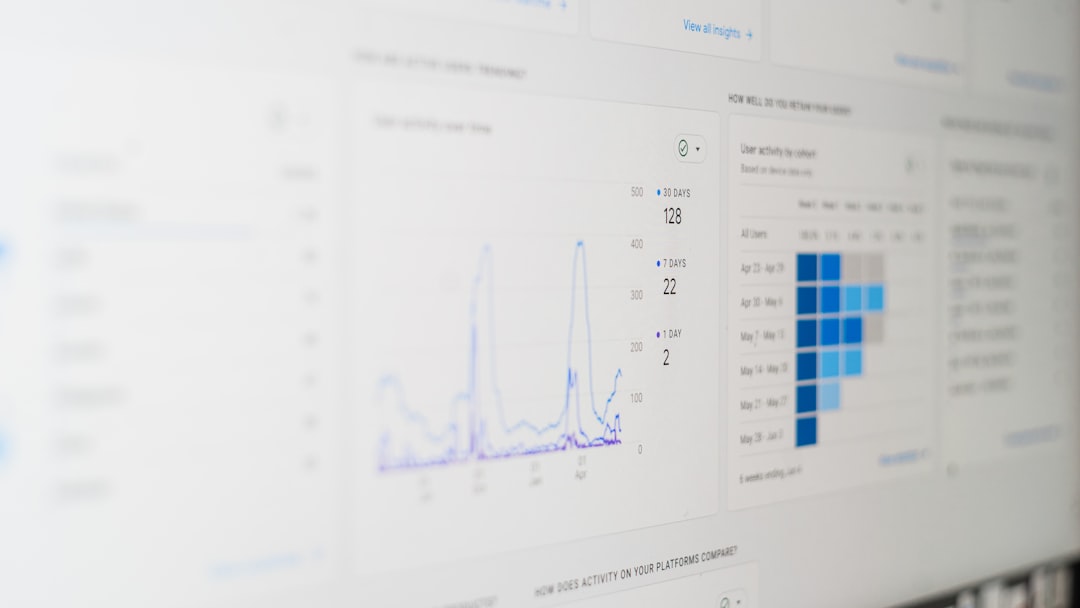
The platform is also strong in model management. Teams can register models, compare versions, monitor performance, and manage deployment workflows. This makes it suitable for organizations where predictive analytics is not just experimental but part of daily decision making.
- Best for: Large enterprises, regulated industries, and teams needing strong governance.
- Key strengths: Enterprise security, advanced statistics, model management, compliance readiness.
- Potential limitation: Cost and complexity may be high for smaller organizations.
How to Choose the Right RapidMiner Alternative
Choosing among these tools is less about finding the single “best” platform and more about matching capabilities to your workflow. If your team wants a visual environment similar to RapidMiner with strong openness, KNIME is a natural place to start. If collaboration and governance are top priorities, Dataiku may be a better fit. If your users are mainly business analysts who need quick automation, Alteryx is highly attractive.
For technically mature machine learning teams, H2O.ai can accelerate experimentation through AutoML and scalable algorithms. For large organizations with strict compliance requirements, SAS Viya provides the governance and reliability that enterprise analytics teams often need.
Before committing to any platform, consider these questions:
- Who will use it? Business analysts, data scientists, engineers, or all of them?
- How much coding is expected? Do users prefer no code, low code, or full code flexibility?
- Where will models run? Locally, in the cloud, inside applications, or through APIs?
- How important is governance? Do you need approvals, versioning, audit trails, and monitoring?
- What data sources matter most? Databases, spreadsheets, cloud warehouses, streaming data, or business apps?
Final Thoughts
RapidMiner helped define what accessible machine learning workflows could look like, but it is not the only option. The predictive analytics market now includes platforms tailored to different teams, industries, and maturity levels. KNIME offers openness and modular workflow design, Dataiku emphasizes collaboration and governed AI, Alteryx empowers business users, H2O.ai accelerates machine learning with AutoML, and SAS Viya delivers enterprise strength analytics.
The best tool is the one that supports your organization’s real workflow: how people prepare data, test ideas, explain predictions, and deploy models into decisions. When chosen well, a predictive analytics platform does more than build models. It helps teams turn data into repeatable intelligence, faster actions, and better business outcomes.