

When you’re shopping for a new television, you’re bound to come across a maze of acronyms—OLED, LCD, LED, UHD—and then there’s QLED. The term might sound like the latest tech buzzword, but it’s actually a distinct display technology with unique advantages and characteristics. If you’ve ever wondered what the “Q” in QLED stands for and what makes QLED TVs different from the rest, you’re in the right place.
TL;DR (Too long, didn’t read):
QLED stands for Quantum Dot Light Emitting Diode. It’s a display technology that builds upon traditional LED-LCD panels by incorporating a layer of quantum dots to enhance color and brightness. While QLED is not the same as OLED, it does offer impressive performance that can be more affordable and better suited to brighter viewing environments. QLED is especially notable for its vivid colors, efficient energy usage, and excellent longevity.
What Does the “Q” in QLED Stand For?
The “Q” in QLED stands for Quantum, referring specifically to quantum dots, which are at the heart of QLED technology. These are microscopic molecules that emit their own colored light when exposed to light, allowing displays to deliver better brightness and a wider range of colors than conventional LED TVs.
How QLED Works
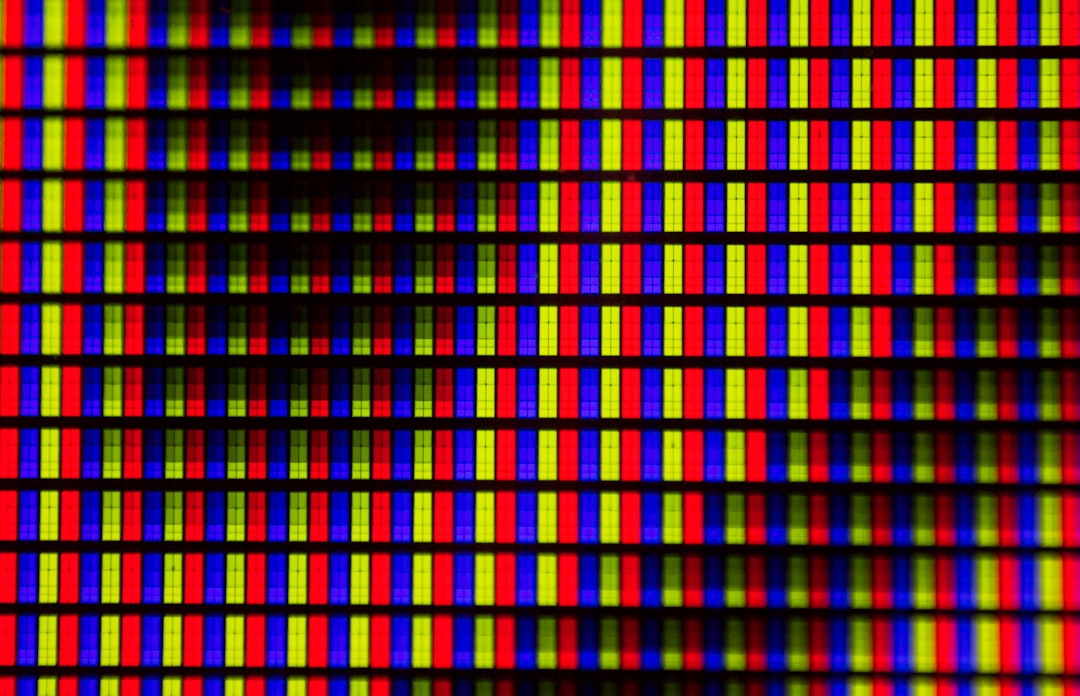
To understand QLED, it’s helpful to know how a traditional LED TV works. LED TVs use a backlight (usually made from LEDs) to illuminate liquid crystal displays (LCDs) that create the actual image. QLED takes this a step further by adding a layer of quantum dots between the LED backlight and the LCD layer.
Here’s a simplified breakdown of the layers in a QLED TV:
- LED backlight: Provides illumination for the screen.
- Quantum dot layer: Enhances color by emitting precise wavelengths of light.
- LCD layer: Manipulates light to form images.
- Color filters and polarizers: Further refine the display quality.
This design allows QLED TVs to produce vibrant colors and excellent brightness, especially in well-lit environments.
What Makes Quantum Dots Special?
Quantum dots are nanometer-sized semiconductors that can emit very specific colors depending on their size. When blue light from an LED backlight hits them, these dots emit either red or green light to mix with the remaining blue light, producing rich, highly accurate colors.
Because quantum dots don’t degrade easily like some other display materials, QLED screens tend to have longer lifespans compared to OLEDs, which are more susceptible to burn-in and color loss over time.
QLED vs. OLED: What’s the Difference?
OLED (Organic Light Emitting Diode) is often considered the gold standard of TV picture quality, but its technology is fundamentally different from QLED. Here’s a quick comparison of the two:
| Feature | QLED | OLED |
|---|---|---|
| Technology | LCD panel with quantum dots and LED backlight | Self-emissive organic pixels (no backlight) |
| Color Brightness | Very high, especially in brighter settings | Excellent but less bright than QLED |
| Black Levels | Good, but not perfect (backlight can bleed) | Perfect blacks (individual pixel control) |
| Price Range | Typically more affordable | Generally more expensive |
| Burn-in Risk | Minimal | Higher risk |
So, while OLED excels at black levels and contrast, QLED wins in terms of brightness, color longevity, and overall durability, making it ideal for households with bright rooms or static content.
Brands That Use QLED
QLED was initially introduced—and is still prominently used—by Samsung, which developed and branded it as an alternative to OLED. However, other manufacturers have also adopted similar quantum dot technologies, albeit sometimes under different names. Notable examples include:
- Samsung: The pioneer and market leader for QLED tech.
- TCL: Offers QLED panels at more affordable prices.
- Hisense: Implements quantum dot layers in their high-end models.
It’s worth noting that while these companies may market their quantum dot displays differently, the underlying technology is largely the same, aiming to deliver better color accuracy and brightness.
Advantages of QLED
QLED TVs bring many benefits to the table, including:
- High Brightness Levels: Ideal for sunny rooms and HDR content.
- Vivid, Accurate Colors: Quantum dots greatly improve color fidelity.
- Longer Lifespan: Less susceptible to burn-in than OLEDs.
- Energy-Efficient: More efficient than older LED/LCD technologies.

Limitations to Keep in Mind
Despite all its strengths, QLED is not without limitations:
- Blacks Not as Deep: Because it uses a backlight, some light bleeding may occur.
- Viewing Angles: Some QLED TVs struggle with reduced clarity and color accuracy at sharp angles.
- Premium Pricing: High-end QLED TVs can still be pricey, though generally less so than OLEDs.
If absolute black levels or ultra-slim designs are your top priorities, OLED may be worth considering instead.
Newer Innovations and the Future of QLED
Samsung and other manufacturers are continually evolving QLED technology. One significant advancement is the development of Neo QLED, which combines quantum dot tech with Mini LED backlighting. This allows for more localized control of brightness and better contrast ratios, narrowing the gap between QLED and OLED in critical performance areas.
Some industry insiders even anticipate the arrival of QD-OLED—a hybrid combining the strengths of quantum dots and OLED. This emerging tech could offer the best of both worlds: perfect blacks with superior color brightness and durability.
Should You Choose a QLED TV?
If you watch a lot of TV in a brightly lit room, want vivid colors, and are concerned about screen longevity, then a QLED TV is definitely a worthy investment. Though it may not offer the same deep blacks or minimalistic design of OLEDs, it brings a lot to the table in terms of performance, value, and innovation.
Besides, with prices becoming increasingly competitive and features more robust every year, QLED TVs are no longer just a premium option—they’re a mainstream choice for many users seeking a visual feast without breaking the bank.
Conclusion
The “Q” in QLED stands for quantum dots, a tiny but powerful technology that dramatically improves picture quality by enhancing color and brightness. While not quite the game-changer that OLED is in terms of contrast and black levels, QLED offers an excellent balance of vibrancy, affordability, and reliability. If you’re trying to find the right TV that performs brilliantly in real-world conditions, especially in well-lit rooms, QLED is definitely worth a closer look.