
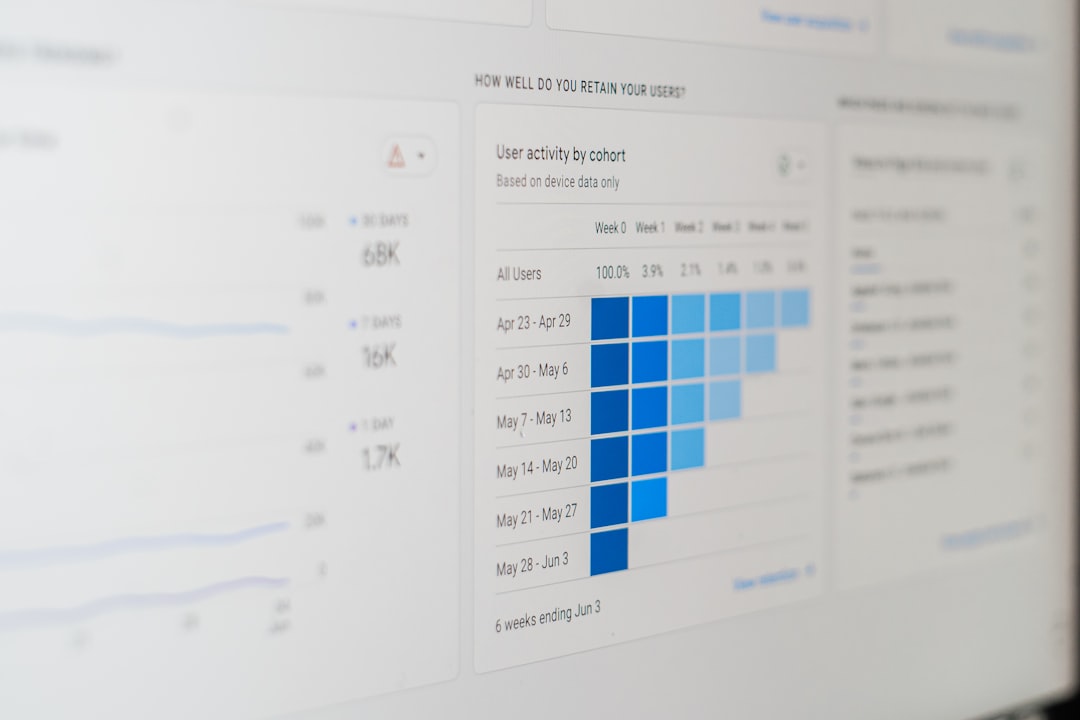
Modern SaaS companies rarely run on a single platform. They depend on billing tools, payment processors, customer support systems, CRMs, email platforms, data warehouses, and internal reporting workflows. Baremetrics integrations help connect these systems so subscription businesses can understand revenue, customers, churn, and growth from a more reliable source of truth.
TLDR: Baremetrics integrations allow SaaS teams to connect billing, payment, CRM, support, and communication tools into a unified analytics environment. This reduces manual reporting, improves visibility into subscription metrics, and helps teams act faster on revenue trends. For companies that rely on recurring revenue, a well-connected SaaS stack can make the difference between reactive decision-making and disciplined growth management.
Why integrations matter in a SaaS business
Subscription businesses generate a continuous stream of operational and financial data. Every signup, trial conversion, upgrade, downgrade, failed payment, cancellation, and refund tells part of the company’s story. The challenge is that this information is often scattered across multiple platforms. Finance may look at billing data, customer success may depend on support conversations, marketing may focus on lifecycle emails, and leadership may want clean revenue dashboards.
Without integrations, teams often resort to spreadsheets, exported CSV files, and manual reconciliation. This creates delays, introduces errors, and causes different departments to operate from different numbers. Baremetrics is designed to reduce this fragmentation by bringing critical revenue and customer data into one analytics layer.
For SaaS leaders, integrations are not merely technical conveniences. They are part of the company’s operating infrastructure. When tools communicate effectively, teams can measure performance more accurately, identify risks earlier, and coordinate responses across departments.

Core billing and payment integrations
The most important integrations for Baremetrics are typically billing and payment platforms. These systems provide the raw subscription data that powers metrics such as monthly recurring revenue, annual recurring revenue, average revenue per user, churn, lifetime value, and net revenue retention.
Baremetrics commonly connects with subscription billing and payment tools such as Stripe, Braintree, Recurly, Chargebee, and other platforms used to process recurring payments. Once connected, Baremetrics can automatically pull in customer, plan, charge, refund, cancellation, and payment failure data. This gives teams a clearer view of how revenue is changing over time.
The practical value is significant. Instead of waiting for finance to prepare monthly reports, founders and operators can monitor revenue movements daily. If churn spikes, if expansion revenue slows, or if trial conversions weaken, the team can see it quickly and investigate the cause.
Connecting customer data for richer context
Revenue metrics are most useful when they are connected to customer context. A cancellation is not just a number; it may represent a customer segment, a product use case, a pricing objection, or an onboarding issue. Integrations help turn raw subscription events into more meaningful business intelligence.
By connecting Baremetrics with customer relationship management and support systems, SaaS teams can better understand the relationship between customer behavior and revenue outcomes. For example, a company may discover that customers from a certain acquisition channel have higher churn, or that accounts with more support interactions are more likely to downgrade. These patterns can guide decisions in marketing, sales, product, and customer success.
The strongest SaaS reporting environments do not treat revenue data as isolated financial information. They combine financial signals with behavioral and operational context. This allows leadership to move beyond “what happened” and toward “why it happened.”
Operational benefits of Baremetrics integrations
When Baremetrics is properly integrated into a SaaS stack, it can support both strategic analysis and day-to-day operations. The benefits typically include:
- Automated reporting: Teams spend less time building recurring reports and more time interpreting results.
- Improved metric consistency: Finance, leadership, and growth teams can align around the same revenue numbers.
- Faster issue detection: Subscription changes, churn spikes, failed payments, and revenue drops can be noticed earlier.
- Better customer segmentation: Teams can analyze performance by plan, cohort, region, acquisition source, or customer type.
- More informed planning: Forecasting becomes more grounded when historical revenue data is clean and accessible.
These advantages are especially important as a SaaS company grows. In the earliest stage, a founder may be able to manually check payments and customer activity. As the customer base expands, manual oversight becomes unreliable. Integrations create the structure needed to scale reporting without losing accuracy.
Using integrations to reduce churn
Churn is one of the most important metrics in any subscription business. Even strong acquisition can be undermined if customers cancel quickly or downgrade frequently. Baremetrics integrations can help teams detect churn patterns and respond with greater discipline.
For example, payment integrations can identify failed charges and involuntary churn caused by expired cards or payment issues. When connected with recovery workflows, teams can automate reminders, update payment requests, and reduce preventable revenue loss. This is particularly valuable because involuntary churn is often fixable with timely communication.
Support and customer success integrations can also provide useful signals. If customers who submit certain types of tickets are more likely to cancel, the company can improve documentation, onboarding, or product experience. If churn is concentrated in a specific plan, the pricing or feature mix may need adjustment.

Integrations and leadership visibility
Executives and founders need reliable visibility into the health of the business. However, leadership reporting often becomes difficult when each department uses separate tools and definitions. Sales may define growth one way, finance another, and customer success another. This can lead to confusion during planning meetings and investor updates.
Baremetrics integrations can help create a shared analytics foundation. Leadership can review the same dashboards and use consistent definitions for core SaaS metrics. This supports better decision-making and more credible communication with stakeholders.
For investor-backed companies, accurate subscription analytics are especially important. Investors often expect clear reporting on MRR, ARR, churn, customer acquisition efficiency, expansion revenue, and retention. A connected SaaS stack makes it easier to produce these numbers with confidence.
Best practices for connecting your SaaS stack
Integrations are powerful, but they should be implemented carefully. A disorganized integration strategy can create duplicate records, inconsistent fields, and misleading dashboards. SaaS teams should approach the process with clear ownership and documentation.
Useful best practices include:
- Start with your billing source of truth. Make sure the payment or subscription platform is accurate before connecting downstream analytics.
- Define your key metrics. Agree on how your company calculates MRR, churn, upgrades, downgrades, refunds, and cancellations.
- Clean customer records. Duplicate or incomplete customer data can weaken segmentation and reporting quality.
- Limit unnecessary complexity. Connect the systems that actually support decision-making rather than integrating every available tool.
- Review data regularly. Integrations should be monitored to ensure syncs remain accurate and field mappings still reflect business needs.
It is also wise to assign internal responsibility for analytics integrity. This may sit with finance, operations, revenue operations, or a data team, depending on the size of the business. What matters is that someone is accountable for ensuring that the numbers remain trustworthy.
Common integration mistakes to avoid
One common mistake is assuming that integration automatically creates insight. Connecting tools is only the first step. Teams still need to ask the right questions, interpret trends carefully, and act on what the data reveals. A dashboard that no one reviews is not a management system.
Another mistake is allowing each department to maintain separate definitions of the same metric. If marketing, finance, and leadership all calculate churn differently, the business will struggle to make confident decisions. Baremetrics can support consistency, but internal alignment remains essential.
Companies should also avoid overcomplicating their stack too early. Small SaaS businesses do not need an enterprise-grade data architecture before they have product-market fit. The goal is to create enough visibility to make sound decisions without adding unnecessary operational burden.
How integrations support sustainable growth
Sustainable SaaS growth depends on more than acquiring new customers. It requires retaining existing customers, expanding successful accounts, improving pricing, reducing failed payments, and understanding which segments create long-term value. Baremetrics integrations support these priorities by making subscription data easier to access and act upon.
When teams can see revenue movements clearly, they can respond with more precision. Marketing can focus on higher-quality acquisition channels. Product teams can prioritize improvements that affect retention. Customer success can identify accounts that need attention. Finance can forecast with greater confidence.

This does not mean Baremetrics replaces every other system in the SaaS stack. Rather, it acts as a focused analytics layer for subscription performance. Its value increases when it is connected thoughtfully to the platforms that manage billing, payments, customer communication, and operational workflows.
Final thoughts
Baremetrics integrations are most valuable when they help a SaaS company create clarity. In a recurring revenue business, clarity is not optional. Teams need to know where revenue is coming from, why customers leave, which segments are growing, and where operational problems are affecting performance.
By connecting Baremetrics with the right billing, payment, CRM, support, and communication tools, SaaS companies can build a more disciplined approach to growth. The result is fewer manual reports, more consistent metrics, and faster recognition of the trends that matter. For serious SaaS operators, a connected stack is not just a technical upgrade; it is a foundation for better management.